Warrior's KC Insights
Adding One Vehicle to a Fleet: What Should Match?
Prepare current brand references, accurate vehicle details and a clear design review when adding a vehicle to your fleet.
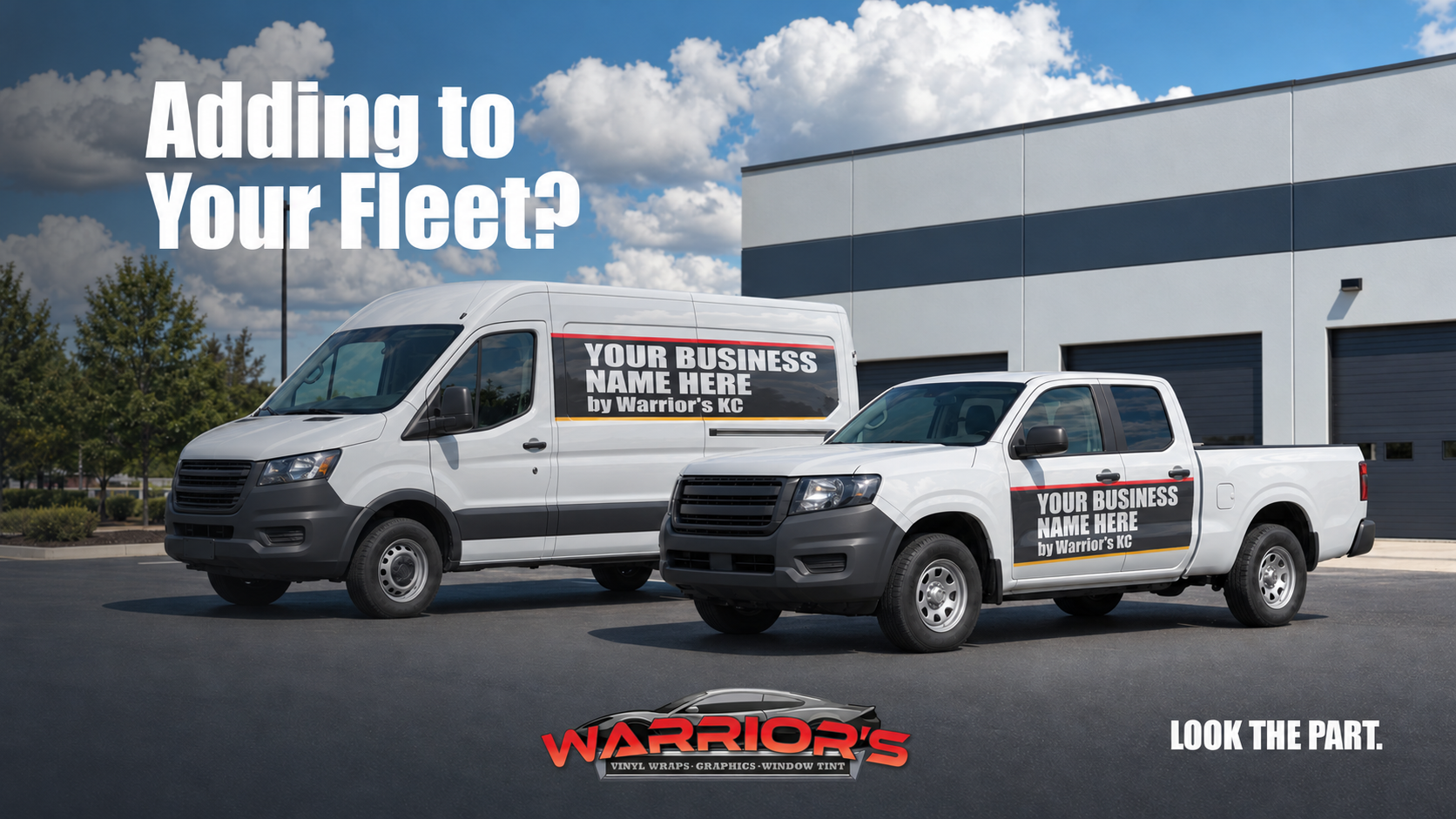
When you add a vehicle to a fleet, aim for a consistent business identity while allowing the layout to fit the new vehicle. The name, logo and approved message should be intentional. Their exact placement may need to change when the vehicle’s shape or usable panels differ.
That makes the first conversation about more than copying a photograph. Before requesting new graphics, gather the references that show what your business currently approves and explain how the new vehicle will fit into the fleet. Warrior’s KC offers fleet graphics for businesses considering this kind of vehicle-branding work.
Establish which existing design is the reference
Start by identifying the vehicle or artwork that represents the design you want to continue. If the fleet has changed over time, there may be more than one version in use. Tell the shop which one is current instead of leaving that decision to inference.
Check the business name, logo, service wording and contact information in the reference. Are they still correct? If a detail needs updating, explain whether the change is intended only for the new vehicle or should guide future additions as well.
An old photograph can be helpful background, but it may not contain the information needed to reproduce artwork. Ask which original files or prior project references the shop needs to evaluate the work. Do not assume a screenshot is interchangeable with the source artwork.
Separate brand decisions from placement decisions
A fleet can share a visual identity without placing every element at exactly the same measurement on every vehicle. Discuss which elements should remain consistent: the approved logo artwork, the principal service message and the way important information is prioritized.
Then review how those elements would be arranged on the new vehicle. A different body configuration may call for another layout. Ask to see the proposal on the actual vehicle type so you can review where information appears in relation to its panels and openings.
The point is to make any adaptation deliberate. If a line of text moves or a graphic changes size, you should understand the reason and approve the resulting design, rather than discover the change after production.
Make a small vehicle inventory
You do not need a complicated system to begin. List the vehicle being added and the existing vehicles that should serve as references. Include year, make, model, body configuration and any business unit number you use internally.
Add current photographs of the relevant sides. Note existing graphics and any body features or equipment the shop should know about. If vehicles have different roles in the business, explain whether their wording needs to differ.
This inventory also helps you ask more precise questions. You can distinguish an addition that should follow the current design from a vehicle that needs an updated service message or a different coverage discussion.
Review each proposed view
Before approving a design, check the proposed views separately. Confirm the business name, service wording and contact details in each one. Check that any unit identifier belongs to the correct vehicle.
Ask the shop to explain any coverage boundary or placement you do not understand. If an existing design cannot simply be transferred to the new body shape, request a clear explanation of the proposed adaptation.
Keep responsibility for approval explicit. Decide who in your business will confirm the wording and who will give final design approval. This avoids treating a preliminary discussion as the final instruction to produce the graphics.
Keep the approved reference for the next addition
Once a design is approved, keep the final reference with the vehicle details and project correspondence. Record which version you approved and what it applies to. Ask the shop what project information should be supplied when another vehicle is added.
If several vehicles are planned, discuss their order and availability before assuming they can all be handled together. Timing and scope need to be confirmed for the actual project; an article cannot establish installation availability or turnaround.
For a Lenexa business adding one vehicle now, the practical goal is a clear handoff: current brand references, accurate vehicle information and an agreed review process. Those inputs make it easier to discuss a consistent fleet identity without treating unlike vehicles as identical canvases.
Does every fleet vehicle need exactly the same layout?
Not necessarily. Keep the approved business identity and message consistent while reviewing how the layout fits each vehicle’s shape and available panels.
What if our existing vehicles use different versions of the graphics?
Identify which version is current before requesting the new design. Explain which details should be retained and which need review rather than asking the shop to guess.
What should we keep after approving the new design?
Keep the approved design reference, vehicle details and project correspondence together. Ask the shop which references will be useful when another vehicle is added.
Tell Warrior’s KC about your vehicle and project goals so the team can discuss the appropriate scope. Request a quote.