The premium service that started it all for Warrior's KC in 2017 has only gotten better with time. For nearly a decade, we have been Lenexa’s trusted choice for flawless window tinting, delivering unmatched interior privacy, glare reduction, and maximum solar heat defense for drivers across the Kansas City Metropolitan area. By combining our foundational commitment to elite craftsmanship with industry-leading ceramic films, we shield your vehicle's interior, safeguard your personal belongings from prying eyes, and elevate your daily drive.
Looking for Warrior's Tinting? You're in the right place. Window tinting remains a core service at our Lenexa shop under the broader Warrior's KC brand.
Driven by Precision. Built on Window Tinting Since 2017.
When we founded Warrior's KC in 2017, we set out with a singular, unwavering mission: to deliver the absolute highest quality window tinting in Lenexa, KS. We didn't build our reputation by taking shortcuts. We built it by treating every single vehicle with flawless precision, clean edges, and zero compromise.
Today, while Warrior’s KC has evolved into a premier automotive name serving the entire Kansas City Metropolitan area, window tinting remains the bedrock of our craftsmanship. Whether you are driving a daily commuter, a luxury sports car, or a commercial vehicle, our specialized film technology delivers maximum heat rejection, glare reduction, and UV defense. We’ve grown over the years, but our dedication to perfect, bubble-free window tint installation hasn't changed a bit.
One Standard. Different Vehicles.
Built Around the Vehicle You Chose.
From a daily driver to a performance car, the recommendation begins with the exact glass, cabin and look in front of us.
Premium SUVs
A cleaner glass line gives your SUV a tailored, upscale presence. The result feels composed and confident, from the school entrance to the valet stand.
Help limit solar warmth across three rows
UV filtering to help preserve leather upholstery
Added discretion for passengers and belongings
Sports Cars
Precision shading follows sculpted glazing for a sleek, purposeful silhouette. It brings an exotic edge that belongs beside carbon accents and low-slung bodywork.
Reduced glare across the driver’s sightline
Less radiant heat in a compact cockpit
Sunlight defense for performance-focused trim
Muscle Cars
Deeper window tones sharpen broad shoulders and an unmistakable stance. That bolder contrast gives American muscle a tougher, street-ready character.
Easier cruising under harsh afternoon rays
Help slow fading of cherished seats
A more secluded interior at every stop
Family Sedans
Balanced tint gives your sedan a polished finish without looking overdone. Its understated character fits weekday commutes, errands and weekend outings.
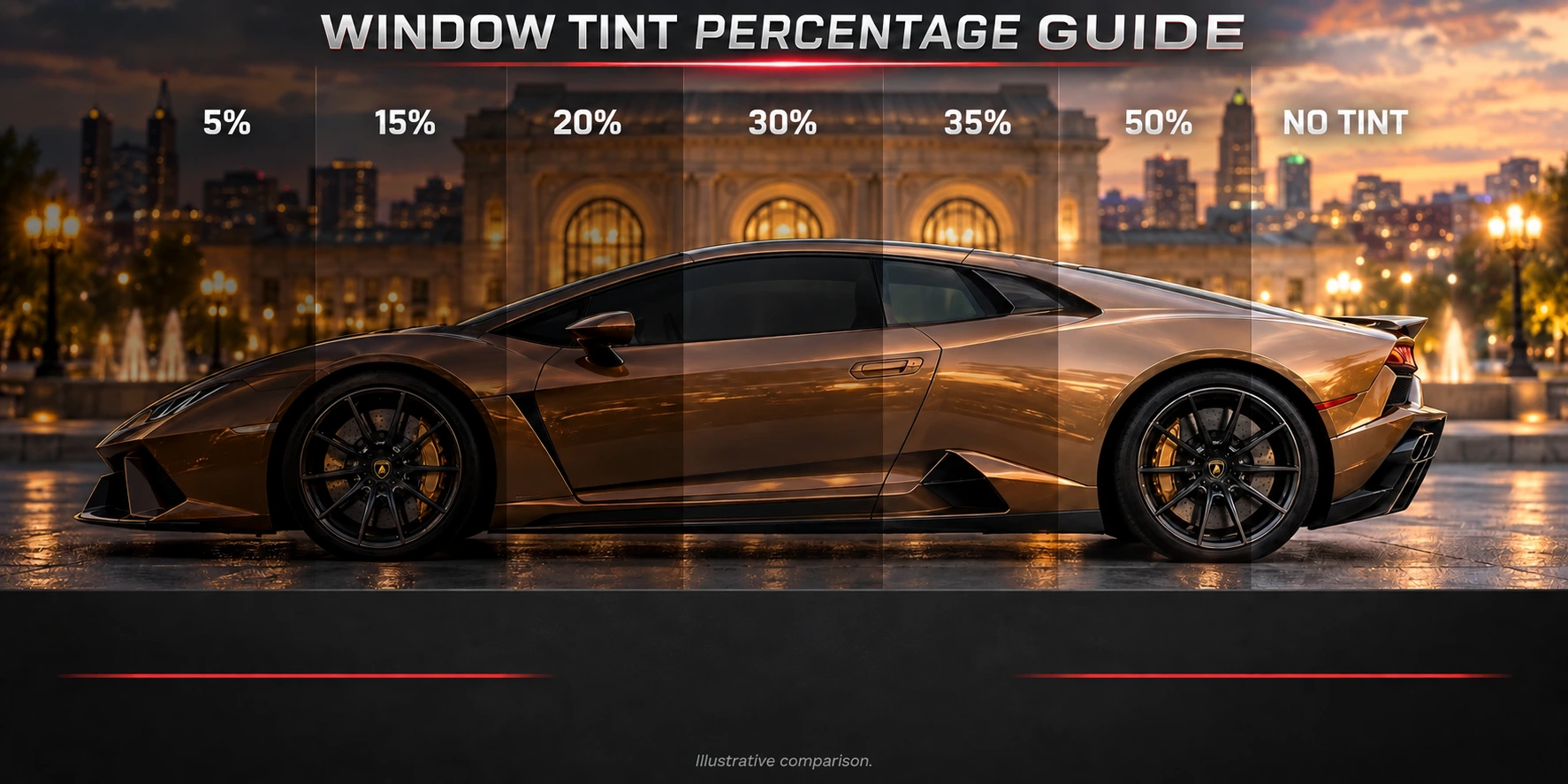
Visible light transmission (VLT) describes how much visible light passes through. Lower percentages look darker; higher percentages let in more light. Choose the shade for your view and your style, then compare the film’s heat and UV performance separately.
Illustrative shade comparison—not a measured simulation or a legal-use chart. Lighting, your screen, glass color and the selected film change the actual appearance. Available shades vary by product.
5%
Deepest shade
The strongest screening in this comparison, with a dramatic, nearly opaque exterior appearance. Outward visibility is most limited after dark.
15%
Bold privacy
A pronounced dark finish that reduces visible brightness while retaining a little more light than 5%. Best considered for permitted rear glazing.
20%
Distinct contrast
A strong visual separation between glass and bodywork, with substantial daytime discretion. Review night-driving needs before choosing.
30%
Balanced shading
A middle-ground appearance that softens bright daylight without the deepest blackout effect. Cabin details remain more visible than with 20%.
35%
Subtle definition
A slightly lighter alternative to 30%, giving the glass a finished look while admitting more light. A useful shade to compare in person.
50%
Light enhancement
A restrained finish for drivers who prefer brighter surroundings and less change to their vehicle’s appearance. Film still determines heat performance.
No tint
Original glass
The baseline with no aftermarket film added. Factory glass may already be shaded, so this does not mean 100% light transmission.
How do I choose the tint type, darkness and performance for my vehicle?+
Start with the appearance, privacy, glare reduction and heat or ultraviolet performance you want. Standard and ceramic films have different constructions, but the useful comparison is the verified data for the exact products available—not a generic performance percentage.
Bring the vehicle year, make and model, details of existing film and the glass positions being considered. Current inventory, the original glass, manufacturer specifications, current law and shop policy all affect the options.
Use physical samples or visual references to compare darkness and appearance. The team confirms the film, application, documented performance, limitations and warranty before installation.
How long after tint installation should I wait to roll down my windows?+
We strongly advise keeping your windows rolled up for 3 to 5 full days after your appointment to let the mounting moisture cure completely.
Why do my newly tinted windows look slightly cloudy or bubbly?+
This is a normal part of the curing phase. Moisture pockets naturally form under the film as it dries out. These spots dry up and disappear on their own within 2 to 3 weeks.
Does window tint affect the rear window defroster lines?+
No. Our precision tint film fits safely directly over your factory defroster elements without altering their heating performance.
How are legal tint limits in Kansas and Missouri checked for my vehicle?+
No. Requirements can vary by state, vehicle type and glass position, and they can change. A film that may be permitted on one side window may not be permitted on another piece of glass. The vehicle's existing glass can also affect the final measured result.
Warrior's KC follows its current installation policy and checks the selected application against current requirements. Not every requested shade can be installed on every piece of glass.
How should I clean my windows after they have been tinted?+
Always use an ammonia-free glass cleaner and a soft microfiber towel. Ammonia breaks down the structural layers of tint film over time, so avoid common household cleaners like Windex.
Often, but the existing film, adhesive, glass condition and integrated features must be assessed first. Film age and exposure can affect how it releases. Rear defroster lines, antennas, sensors and prior damage may require additional care, and removal can take longer than a new installation on clean glass.
The team will inspect the existing film before confirming removal scope or timing and explain any concerns involving previously damaged components.
Timing depends on the vehicle, number and shape of the windows, existing film or adhesive, glass condition, selected product and the shop schedule. A simple vehicle with clean glass may require a different process from a vehicle with old film, complex glazing or features that need additional care.
The team will confirm expected timing after the vehicle and scope are known and explain any preparation or post-installation guidance that applies to the selected film.
Manufacturer training matters because film selection, preparation, installation and care are connected. The final recommendation still depends on your exact vehicle, glass, desired appearance, current requirements and the verified data for the product offered.
What This Means for You
Training That Supports Better Project Decisions
01
Matched to the Project
Film and protection systems are evaluated around the vehicle, its condition, intended coverage, daily use and desired result.
02
Installed With a Process
Vehicle preparation, material handling, alignment, contours, seams, edges and final inspection receive deliberate attention.
03
Planned Before Drop-Off
The selected material, coverage, care requirements, expected shop window and any applicable written product warranty are reviewed before work begins.
Useful Answers
Why These Credentials Matter
Why does manufacturer training matter if the material is already premium?
Premium film does not install itself. Surface preparation, product selection, application technique, seam and edge treatment, finishing and aftercare all influence the completed installation. Manufacturer training gives the installer product-specific methods and a stronger technical basis for those decisions.
Why should I choose a credentialed window tint installer?
Credentials help you evaluate the training behind the installation. Manufacturer-specific training gives an installer a technical foundation for working with the selected film, including glass preparation, film handling, application and aftercare. That knowledge supports informed product recommendations and a consistent installation process, so you can ask about the exact film, its care requirements and applicable written warranty with greater confidence.
Do you use the same material system for every project?
No. The appropriate system depends on the vehicle, surface condition, coverage, use, exposure, desired finish and project objective. Warrior's KC reviews those factors before recommending a film or coating.