Choosing automotive window tint is not primarily about choosing a darkness. It is about finding the right balance of appearance, privacy, comfort and product-specific performance for the way you use the vehicle.
01 · Define the Goal
Start With What You Want the Tint to Change
Two people with the same vehicle may need different tint. One may care most about a clean, dark profile. Another may want more cabin privacy. A daily commuter may focus on glare and heat, while someone protecting a premium interior may want to compare documented ultraviolet performance.
Put those priorities in order before discussing products. It gives the installer a real decision to solve instead of reducing the conversation to one shade number.
- How should the vehicle look from the outside?
- How private should the cabin feel?
- Which windows create the most glare or heat concern?
- What product performance matters enough to verify?
02 · Inspect the Starting Point
The Vehicle and Existing Glass Change the Answer
The same film can look different from one vehicle to another because factory glass, interior color, roof shape and window size affect the finished appearance. Existing film, adhesive, scratches, defroster lines, antennas and sensors can also change the removal and installation plan.
That is why the useful starting information is the year, make and model, the windows being considered, any existing tint and the condition of the glass. A direct inspection may be needed before timing or removal can be confirmed.
03 · Compare the Exact Product
Darkness and Performance Are Not the Same Thing
A darker appearance does not automatically tell you how a film handles heat, glare or ultraviolet exposure. Film construction and product specifications matter. Compare the manufacturer's documented data for the exact product being offered—not a general claim applied to every film.
Ask the shop to identify the film, explain the relevant performance measurements and provide the warranty and care guidance connected to that product. If one feature matters most to you, say so directly.
04 · Confirm Current Requirements
Every Piece of Glass Is Not Treated the Same
Window-tint requirements can vary by state, vehicle type and glass position, and requirements can change. Existing factory glass can also affect the final measured result. A request that may fit one side window may not fit another piece of glass.
Review the selected application against current requirements and the shop's installation policy before the appointment. The responsible answer is tied to the actual vehicle and glass—not a universal percentage copied from another vehicle.
05 · Look Beyond the Sample
The Installation Determines How the Choice Comes Together
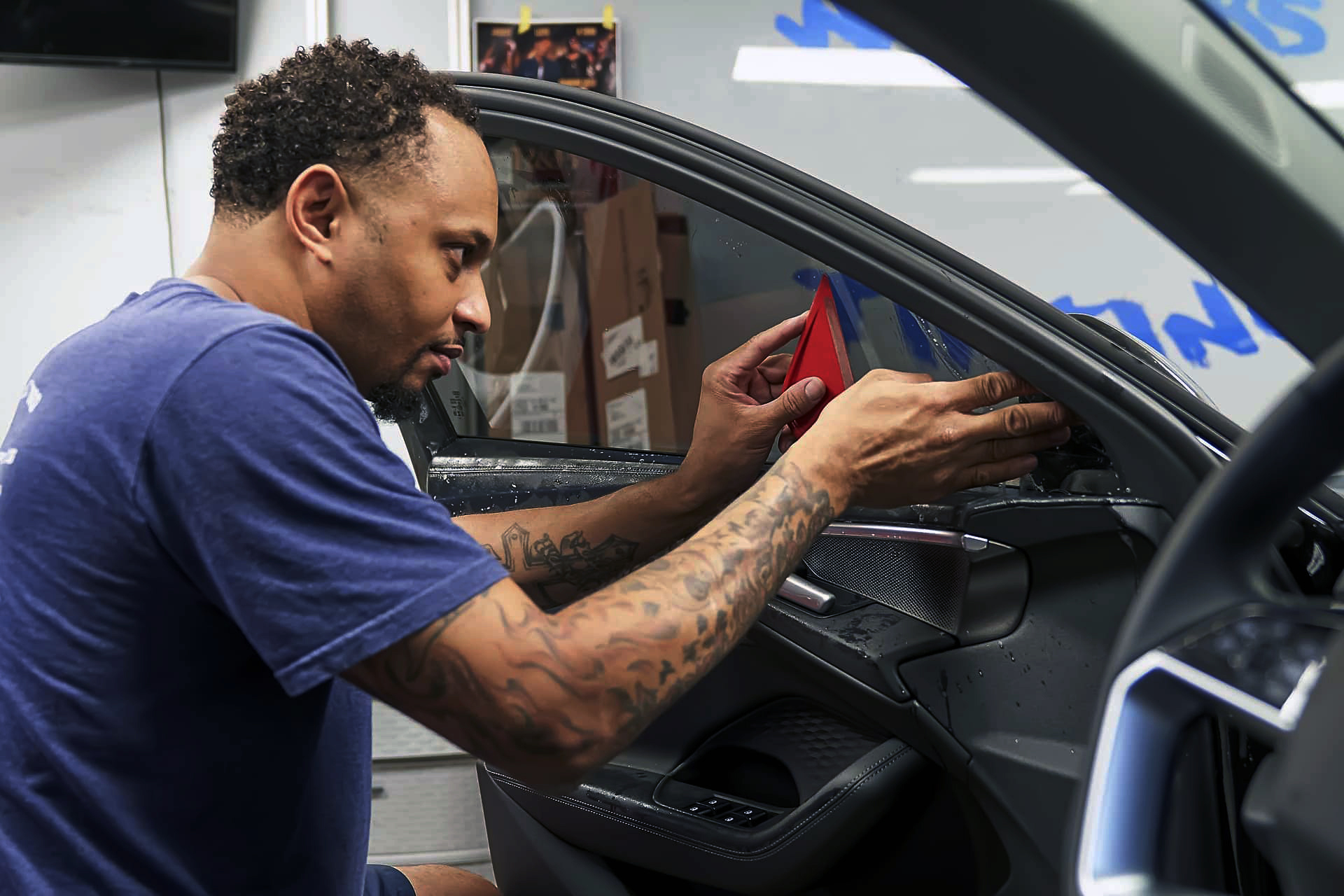
Product selection matters, but preparation, fit and finishing determine how the film looks on the vehicle. The installer must work around seals, curves, edges, defroster elements and integrated features while keeping contamination and moisture controlled.
Ask what the vehicle needs before arrival, how existing film is handled, what timing is expected and what aftercare applies. Pickup time and full curing are not always the same thing, so follow the product-specific guidance given at handoff.
06 · Make the Conversation Useful
Six Questions to Ask Before You Schedule
- Which exact film are you recommending for my vehicle?
- How does its documented performance match what I care about?
- How will my existing glass affect the appearance or measured result?
- Is the requested application consistent with current requirements and shop policy?
- Does existing film or glass condition change the scope or timing?
- What warranty, curing and care guidance comes with the selected film?